Discover the perfect journey for your child's heart and mind
3 courses found
In this foundational stage, students transition from passive technology consumers to active creators by mastering the core concept of algorithms—precise, step-by-step instructions. Following the UK Key Stage 1 (KS1) standards, the curriculum emphasizes "logical reasoning" and the vital skill of debugging. By learning to predict outcomes and systematically fix errors, children develop the cognitive resilience needed to solve problems before they even touch a keyboard. This level instills a "builder’s mindset," ensuring that every young learner views technology as a canvas for their own imagination rather than a mystery they simply observe.
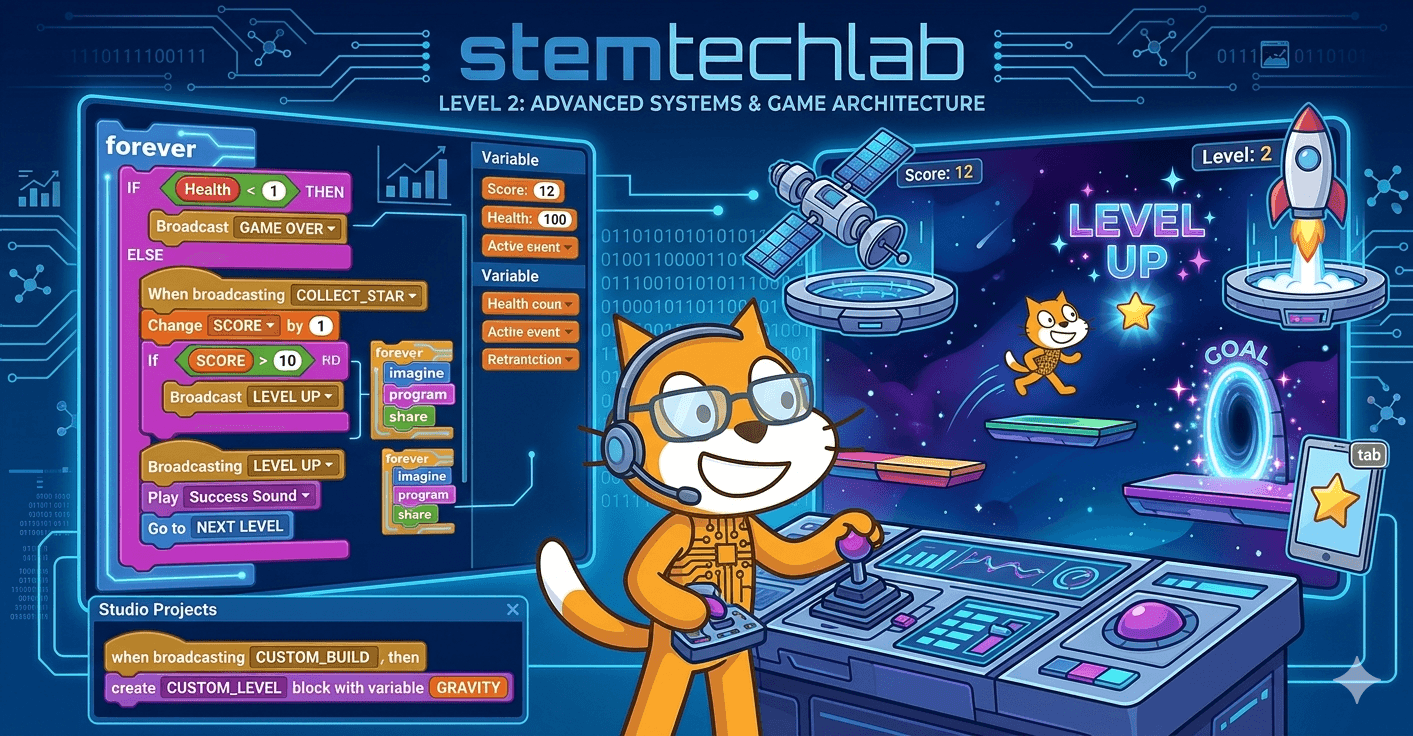
As students progress into the complexities of variables, sequences, and loops, they move toward the goal of "analytical application." This course focuses heavily on decomposition—the ability to break down a daunting, multi-layered project into small, manageable components. British academic research shows that this structural approach to programming significantly boosts a child’s general academic independence, as they learn to simulate real-world systems through code. By the end of Level 2, students are no longer just following tutorials; they are designing original digital architectures with efficiency and precision.
From first lines of code to real creative projects! In this engaging Python course, students start with the basics of programming such as calculations, variables, and text handling. They gradually build strong logical thinking by working with lists, data structures, conditions, and loops. Students then explore creativity through drawing with Turtle graphics, learn how to organize code using functions, and discover how real programs are built using objects and reusable logic. By the end, they confidently create interactive and structured programs using core Python skills.